
South Carolina Release Records
A release record starts with the custodian that ended an episode of confinement. A county sheriff or detention office owns the record of a local jail exit. The South Carolina Department of Corrections, or SCDC, owns the record of a state-prison departure. The Federal Bureau of Prisons keeps federal release data. Courts preserve bond, disposition, sentence, and filed orders. Each source answers a different part of the same question.
“Released” means the person left the custody of a named facility. It does not always mean unrestricted return to the community. Bond, recognizance, dismissal, time served, sentence expiration, parole, probation, and a court order can end confinement. A transfer to SCDC, another county, BOP, ICE, military custody, or another detainer also closes one facility record while custody continues. A detainer is a request or legal basis for another authority to take custody. Ask for the release type and receiving custodian before treating roster absence as final release.
The SCDC current-search disclaimer shows why that distinction matters.
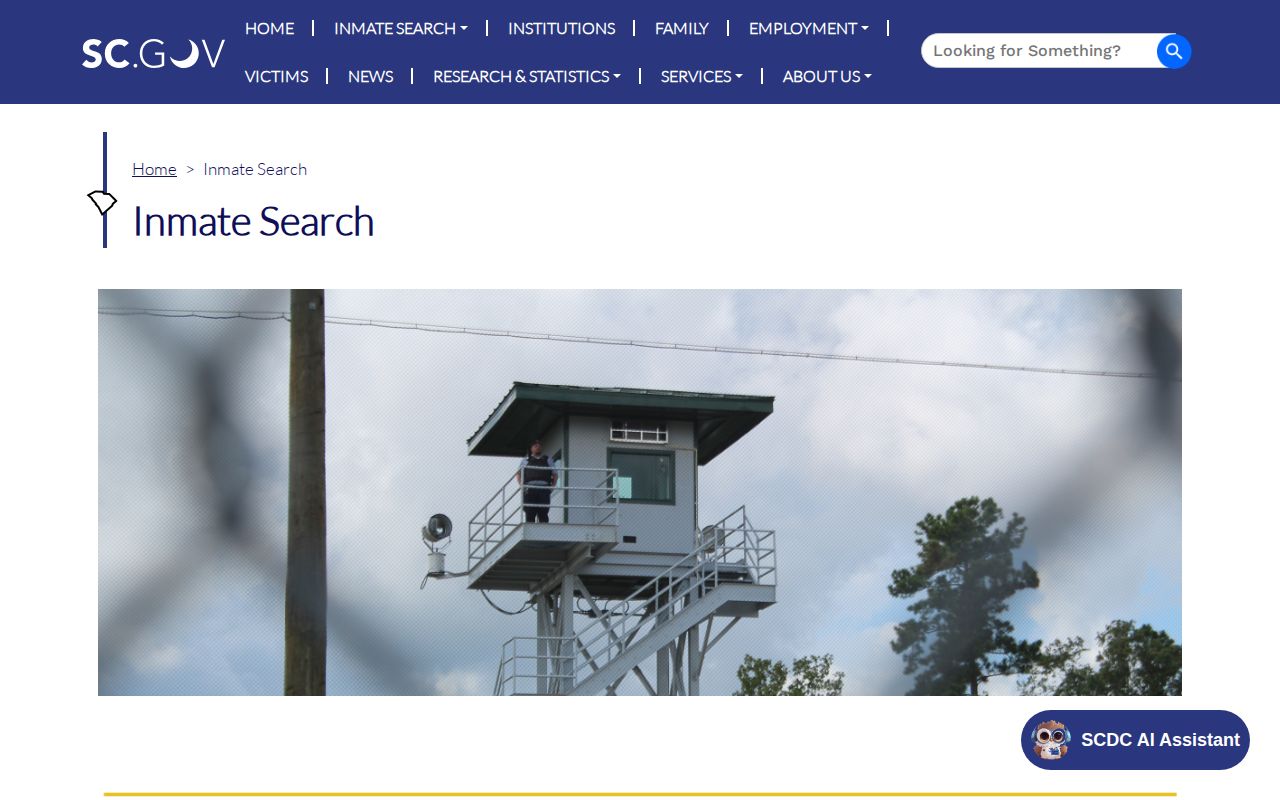
The ordinary locator covers people currently sentenced to and incarcerated in SCDC, so an absent name calls for a different record source.
Roster absence is not release proof. Confirm the recorded exit type, date, and next custodian with the agency that held the person.
South Carolina Release Types
South Carolina law separates physical release from full sentence discharge. An expiration or maxout release occurs when the prison term, less allowed credits, has been met. Parole is a conditional prison exit. Probation may follow confinement. Community supervision and supervised reentry also end prison custody while state authority continues. Under Section 24-21-560, successful community supervision satisfies the sentence and requires discharge, but the prison Release Date can come first.
| Release event | What it means | Next record source |
|---|---|---|
| Bond, recognizance, or dismissal | A county jail episode ends under court authority. | County release record and court Public Index |
| Time served or local sentence end | The local custodial term has been met. | County jail or records office |
| SCDC expiration or maxout | The state-prison term ends after permitted credits. | SCDC Released Inmate Search |
| Parole, probation, or supervision | Prison custody ends, but conditions may continue. | SCDC release list and SCDPPPS |
| Detainer, remand, or transfer | One custodian releases the person to another. | Sending agency and receiving custodian |
| Federal release | BOP custody ends on the recorded federal date. | BOP Inmate Locator |
SCDC reporting also uses labels such as supervised reentry, community supervision, Youthful Offender Act categories, resentencing, and other. Read the exact label. Do not turn each departure into parole or a final discharge. Death appears in SCDC departure statistics but is not a community release.
South Carolina Release Record Fields
A useful South Carolina release record identifies both the person and the event. County formats vary, but an existing local record may contain a booking number, admission and release timestamps, release authority, release reason, destination, or receiving custodian. SCDC uses a standard statewide released list. Its visible results show SCDC ID, name, sex, race, age, sex-offender indicator, Release Date, Release Type, and County. The export can add SID, victim indicator, detainer indicator, and most-serious-offense information.
| Field | What it shows |
|---|---|
| Name and agency number | The identity to compare against namesakes; SCDC may show SCDC ID and SID. |
| Admission or booking date | When the reported custody episode began. |
| Release date and time | When the named custodian ended that episode; county records may hold the time. |
| Release type or authority | Bond, court order, expiration, parole, supervision, transfer, or another recorded basis. |
| Facility or county | The source connected to the event, not proof of a current home. |
| Detainer or destination | A possible transfer to another authority, when recorded and public. |
| Supervision | Whether SCDPPPS may have a later active record. |
The SCDC list has no generic “Discharged” status column. Inclusion in the Released Inmate Search, paired with its Release Date and Release Type, is the release evidence. Its standard results do not show a released-person photograph. Older online retention is also unspecified. For an old event or a certified record, request the existing file from the responsible agency.
Request South Carolina Release Records
First identify the custody layer. A county jail record goes to the sheriff, detention center, county records office, or the court that issued the release order. County forms and delivery methods differ. A state-prison record goes to SCDC. Ask for an existing record, not a new report or analysis.
- Give the full name and the SCDC ID, SID, or county booking number if known. Include an approximate admission and release range.
- Name the fields sought: admission and release timestamps, release type or authority, receiving custodian or destination if recorded, and public offense or sentence information.
- For a county exit, send the request to the county custodian. For an SCDC exit, send a written request with the requester’s name, address, and phone to the SCDC FOIA Coordinator.
- Ask for electronic records and segregable public portions. The agency may redact exempt material rather than withhold the whole public part.
- Compare the response with court disposition and any SCDPPPS record. A transfer and a community release can share an exit date but have different meanings.
SCDC accepts requests at FOIA Coordinator, Office of General Counsel, South Carolina Department of Corrections, P.O. Box 21787, Columbia, SC 29221-1787, or FOIA@doc.sc.gov. Its reviewed published rates are $0.10 per black-and-white page, $0.25 per color page, and $18.95 per hour for qualified search, retrieval, and redaction. Rates can change, so try the free released-list export first.
State law permits fees based on actual search, retrieval, and redaction cost at the lowest-paid qualified employee rate. Electronic transmission has no per-page fee, and an agency may seek a deposit up to 25 percent. The general determination period is ten business days, or 20 for records more than 24 months old. After approval and any deposit, production is generally due within 30 calendar days, or 35 for older records, unless both sides extend the time in writing.
South Carolina Release Record Law
South Carolina’s Freedom of Information Act reaches documentary material prepared, owned, used, possessed, or retained by a public body, subject to exclusions. It can cover existing jail booking and release records and public SCDC inmate data. It does not make an agency create a new list, undo a seal, or reveal protected juvenile details. Law-enforcement material may be withheld only to the extent an exemption applies, including harm to an active case, safety, privacy, confidential sources, or protected methods.
Key statutes:
Sections 30-4-20 and 30-4-30 define public records and set access, fee, response, and production rules.
Section 30-4-40 permits specific exemptions while leaving segregable public portions available.
Sections 17-1-40 and 17-1-60 address qualifying expungement or destruction and fee-based booking-record publication.
Release alone does not prove innocence, expungement, or a right to erase each record. A seal or expungement can change what an agency may disclose. The best proof is the certified disposition or expungement order, followed by a focused request to the originating agency. Historical depth in the online SCDC released list is not promised, so an old no-result should lead to SCDC Inmate Records or FOIA.
South Carolina Release Trends
SCDC’s FY2025 release report counted 5,708 base-population releases from July 1, 2024 through June 30, 2025. The comparable totals were 5,731 in FY2023 and 5,186 in FY2024. That is a calculated 10.1 percent rise from FY2024 after a 9.1 percent drop from FY2023. These figures describe SCDC prison departures, not all county jail releases in South Carolina.
The mix prevents a second mistake. In FY2025, 39.5 percent were expiration less permitted credits, 17.9 percent community supervision, 17.7 percent probation, and 15.2 percent supervised reentry. A prison exit and a final discharge are not the same event.
The SCDC statistics hub places release reports with other official agency data.
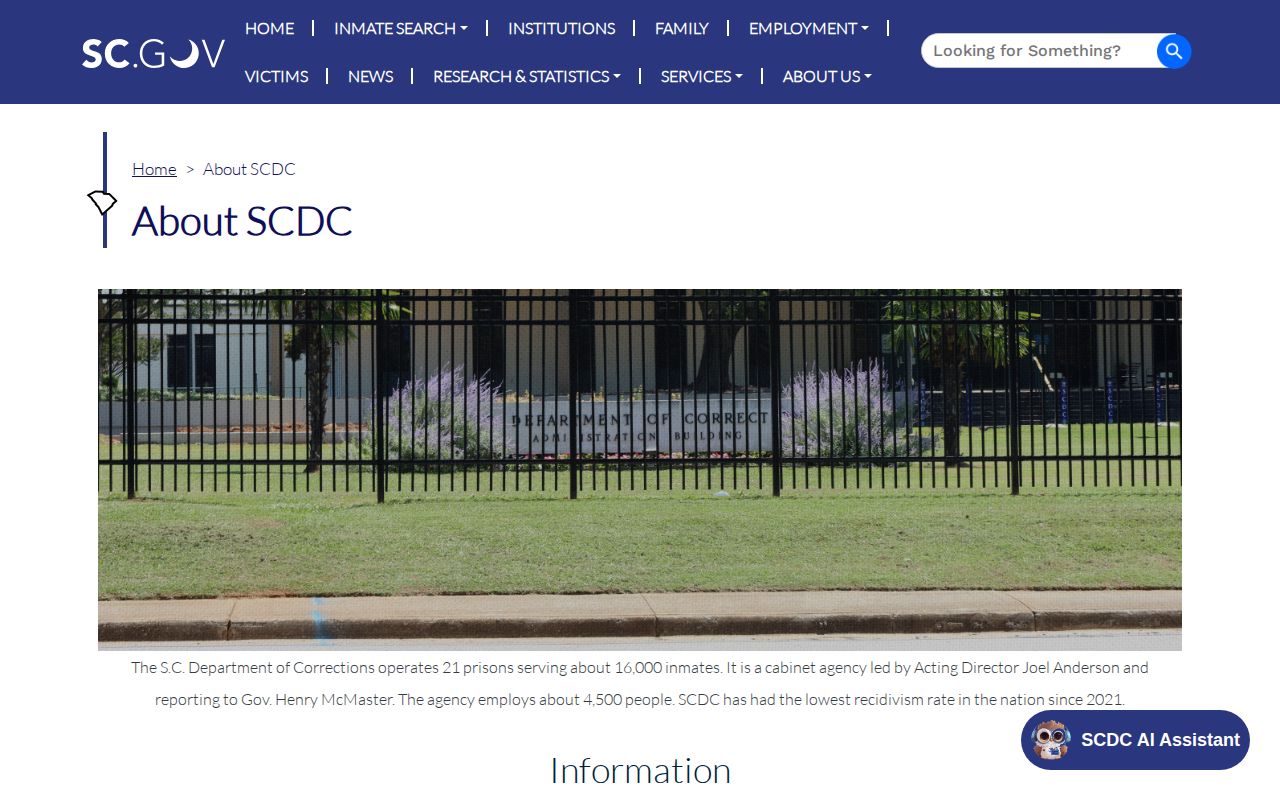
The source makes the report date and custody scope easier to check before comparing yearly totals.
South Carolina Release Day
SCDC Policy OP-21.09 documents an audit before departure. Staff review release authority, the date, detainers, discipline, convictions, registry and DNA screens, and other required records. Applicable releases receive a certificate. A release sticker goes on the SCDC identification card, and stored identification, keys, Social Security card, and property are returned. Family may supply clothes, or the institution provides them. An SCDC uniform is not release clothing.
Staff record a post-release address and phone number. Bus help is conditional. When a ticket is needed, staff verify the destination and may route travel within South Carolina toward the recorded home or family, the county of conviction, or another basis allowed by policy. The ticket may stop at the closest bus-route point, leaving onward travel to the person. These are SCDC rules, not promises about county jail practice.
No official source reviewed establishes a fixed state-funded cash grant. The documented check is the person’s own trust or work-release balance. A scheduled release can request all or part of a Cooper Trust Fund balance in advance, and identity-verified later requests may be mailed. Walk-in check pickup is unavailable. Calling personal funds “gate money” would misstate the policy.
The SCDC Victim Services page provides a separate official route for state-prison status information.
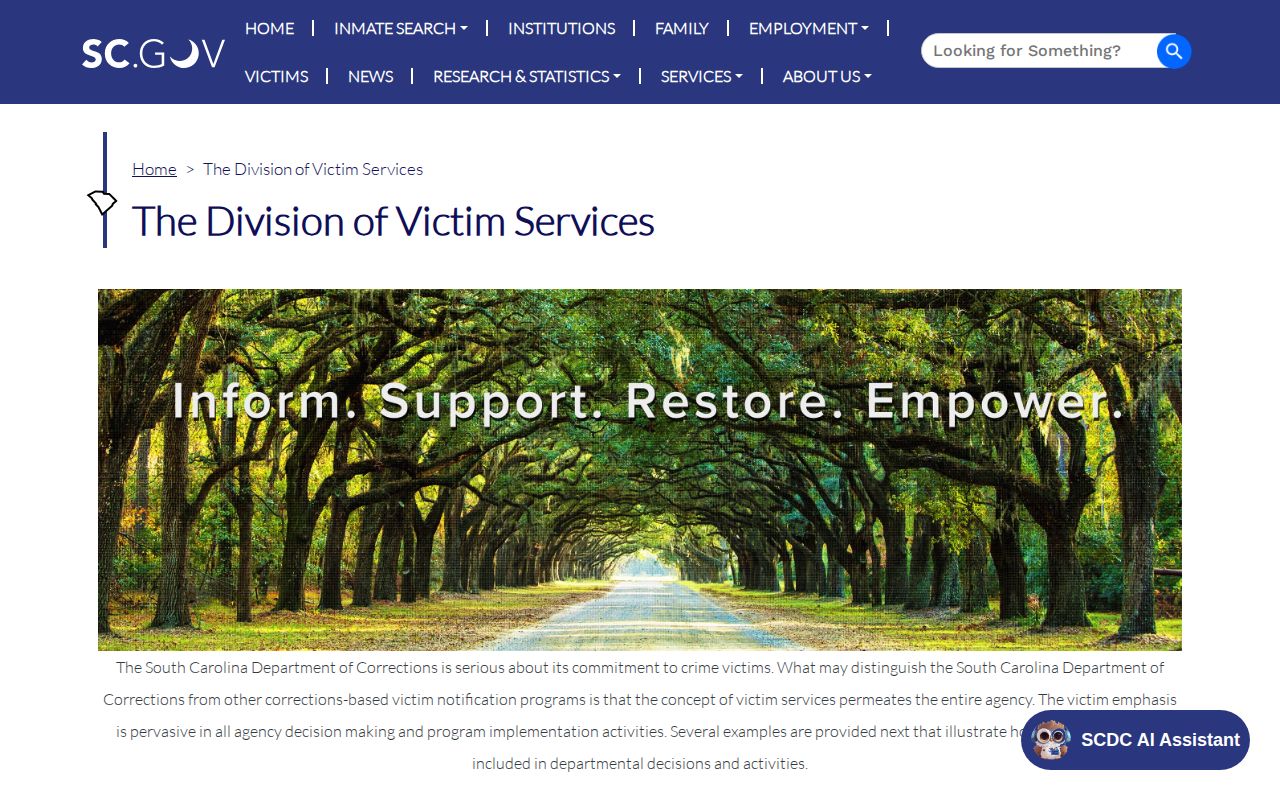
Victim Services may address projected dates, while the released list remains the public source for the recorded prison departure.
South Carolina Booking Record Remedies
Section 17-1-60 is a focused anti-pay-to-remove rule, not a statewide ban on booking photographs. It bars obtaining or providing South Carolina arrest and booking records, including photos, with knowledge that publication will be tied to a fee for removal, revision, or nonpublication. A publisher must act without a fee within 30 days after a compliant certified-mail request supported by the required identifying details and certified proof of a qualifying result.
Qualifying outcomes include discharged or dismissed charges, expungement, or a not-guilty result. A dismissal after a plea to a lesser or different offense may call for an accurate revision rather than deletion. Section 17-1-40 separately controls destruction or sealing after qualifying outcomes. A mere release date triggers neither every remedy nor a conclusion about the charge. Use the court disposition and the originating agency’s record.
Find South Carolina Released Inmates
Start with the operator, not a broad name search. South Carolina released inmates from county jails do not enter the SCDC release list merely because they were held in the state. Likewise, an SCDC county filter does not turn a state-prison result into a county-jail release. Use full name plus an agency number, birth year, or another lawful identifier to separate namesakes.
- If state prison is plausible, check the current SCDC search. Its data reflects the prior midnight and does not include released people.
- With an approximate state-prison exit range, use the separate SCDC Released Inmate Search. Read Release Date, Release Type, and any exported detainer field.
- For a county jail episode, identify the county and request its release record. Check the matching court Public Index for bond, disposition, sentence, or a filed order.
- When supervision may follow, check SCDPPPS. Its public data represents the previous day and can omit people whose supervision ended.
- For federal custody, use BOP. For immigration routing, use ICE. A no-result in either system does not prove community release.
- Use SC VINE for notification where the supplying agency participates, and re-register after an agency transfer.
Why did the name vanish from the jail roster? Live rosters are built for present custody. A name can leave after release, transfer, court movement, or a data update. The release record and receiving agency resolve which event occurred.
SCDC Released Inmate Search
South Carolina splits current and released state-prison records between two official applications. The current SCDC search offers identity or number fields and can display SCDC ID, SID, admission date, current location, offense and sentence rows, photos, and separate projected milestones. It expressly drops released people. The released application is date-first: enter beginning and ending Release Date, select a county or All Locations or Out-of-State, and optionally select its sex-offender filter.
| SCDC tool | Search input | What it establishes |
|---|---|---|
| Current inmate search | Identity and offered agency-number fields | Current SCDC placement as of the stated data date |
| Released inmate search | Release-date range, county or All Locations, optional filter | Actual SCDC Release Date and Release Type |
| Released export | The completed released-search result set | Added SID, detainer, victim, and offense fields when supplied |
Results display ten at a time and support paging and export. Broad ranges can produce many matches, so compare SCDC ID or SID, age, and other identifiers. The County value is part of a state-prison release app. It is not proof that a county jail released the person or that the county is a current home. Full SCDC release and records steps appear on the SCDC Offender Search page.
South Carolina Release Court Records
South Carolina’s court gateway is statewide routing, not one universal name search. It sends users by county, city, or ZIP code to county Public Indexes, and only participating municipal courts appear. A docket can corroborate a charge, bond, disposition, sentence, or filed order after a jail entry disappears. It is not a live custody source. Select the court tied to the case, then use the jail or SCDC record for the actual exit.
As of January 1, 2026, the Judicial Branch says home addresses no longer display for new or existing cases. JavaScript, cookies, and sometimes pop-ups are needed. If a city case is absent, ask that municipal clerk rather than assuming no case exists.
The South Carolina courthouse directory helps identify the right local court.
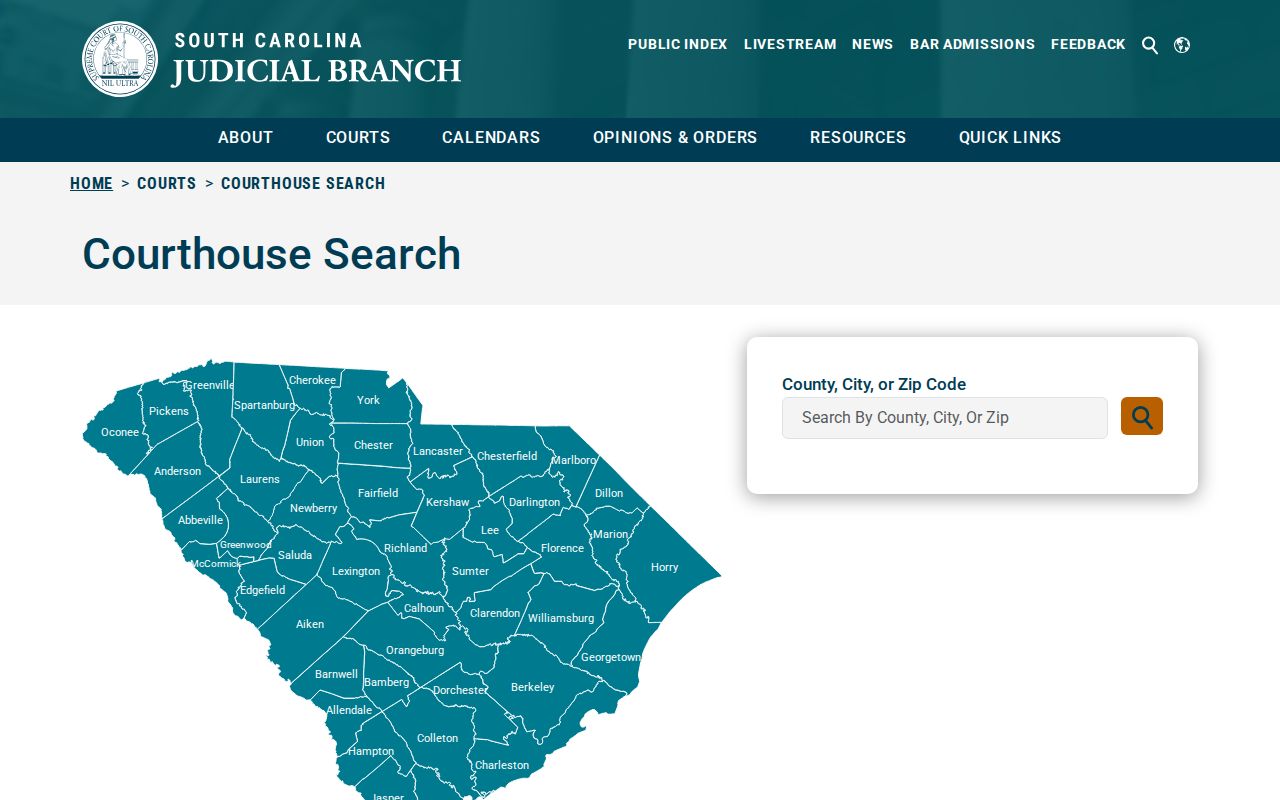
The directory supplies the local route that the statewide case gateway still requires.
South Carolina Release Supervision
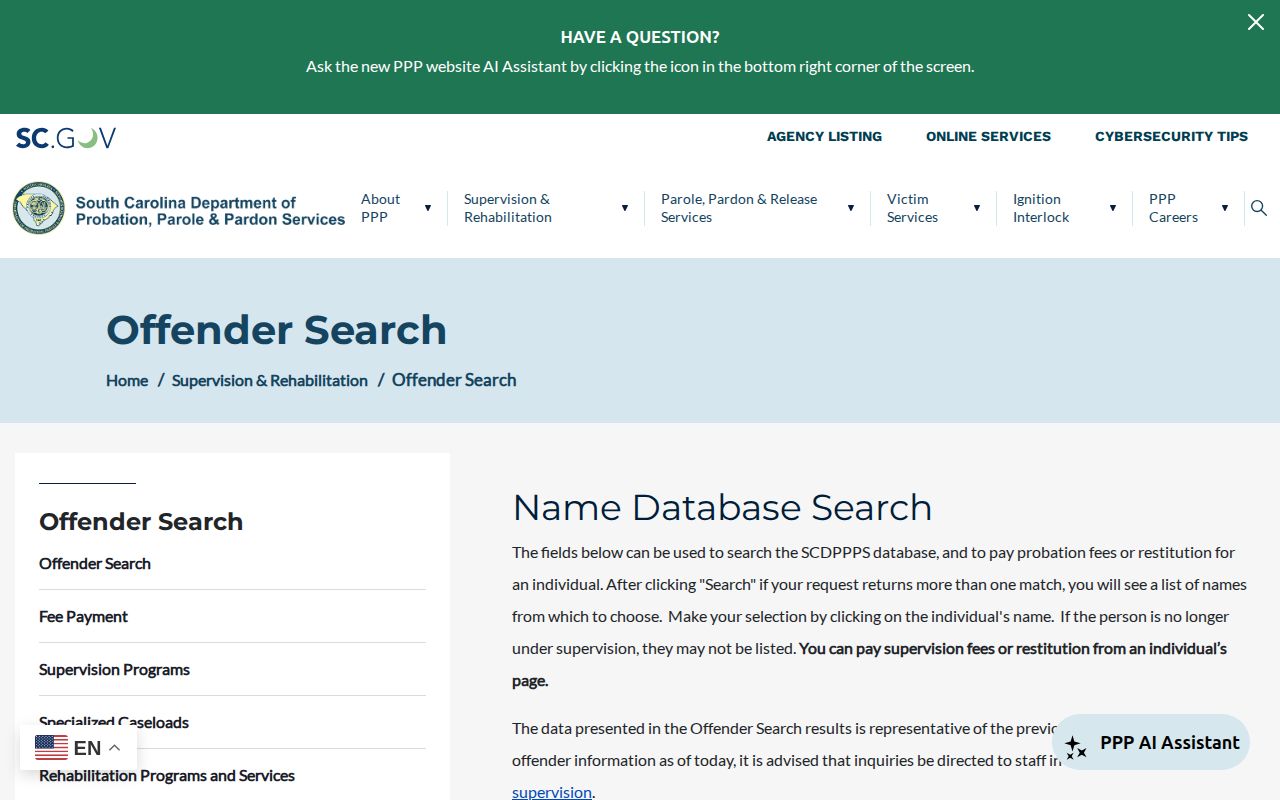
The South Carolina Board of Paroles and Pardons grants or denies parole. SCDPPPS then administers adult probation, parole, community supervision, supervised reentry, and related categories. Its search accepts first and last name, SID, county, and birth year in stated combinations. A positive result supports active supervision as of the prior day. A negative result does not prove discharge because a person no longer supervised may not appear.
The SCDPPPS offender search states its own currency and search combinations.
For a same-day question or formal discharge proof, contact the county supervision office and request its existing closure record.
The Board’s annual calendar is for planning, while the person search posts named hearings and results about 30 days before a hearing. A date is not a decision, and a grant is not the physical exit time.
The Board calendar landing page is the durable source for revisions.
The linked annual calendar separates Full Board, panel, pardon, and administrative dates.
The person-specific hearing and results search supplies the name-based next step.
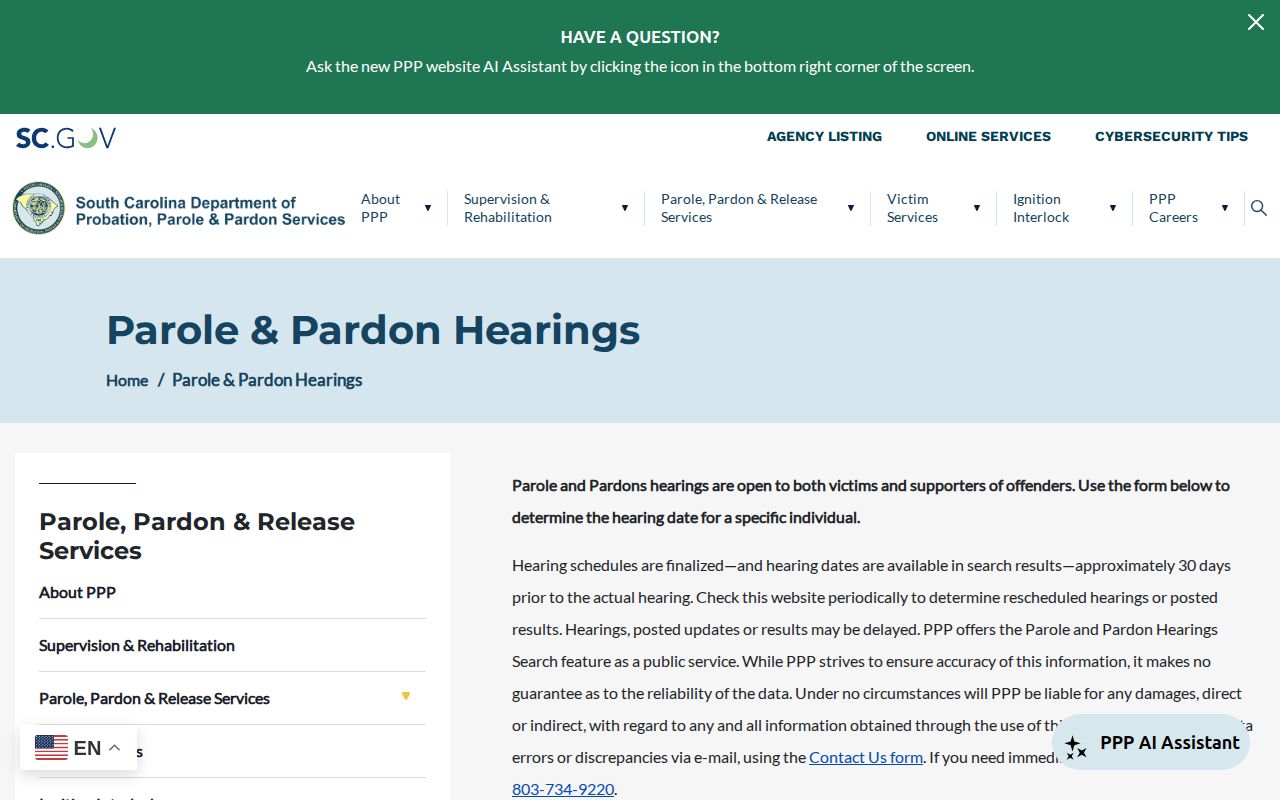
After a posted result, confirm the actual departure in the SCDC released list and then check SCDPPPS.
South Carolina Release Notifications
SC VINE covers 43 participating county detention centers, two prison work camps, two city jails, SCDC, and SCDPPPS. Participating systems send updates every 15 minutes. That interval does not make the service a full historical release archive, and local coverage is not universal. Search an adult by name or offender number, use birth date or middle initial to separate matches, and read the named agency and status.
Registration can use phone, text, TTY, or email. Keep the four-digit PIN for automated calls, which repeat for up to 48 hours or until acknowledged. Email and text do not use that call PIN. Re-register after an agency transfer because the next custodian sends a different record.
The South Carolina VINELink portal combines person search and notification registration.
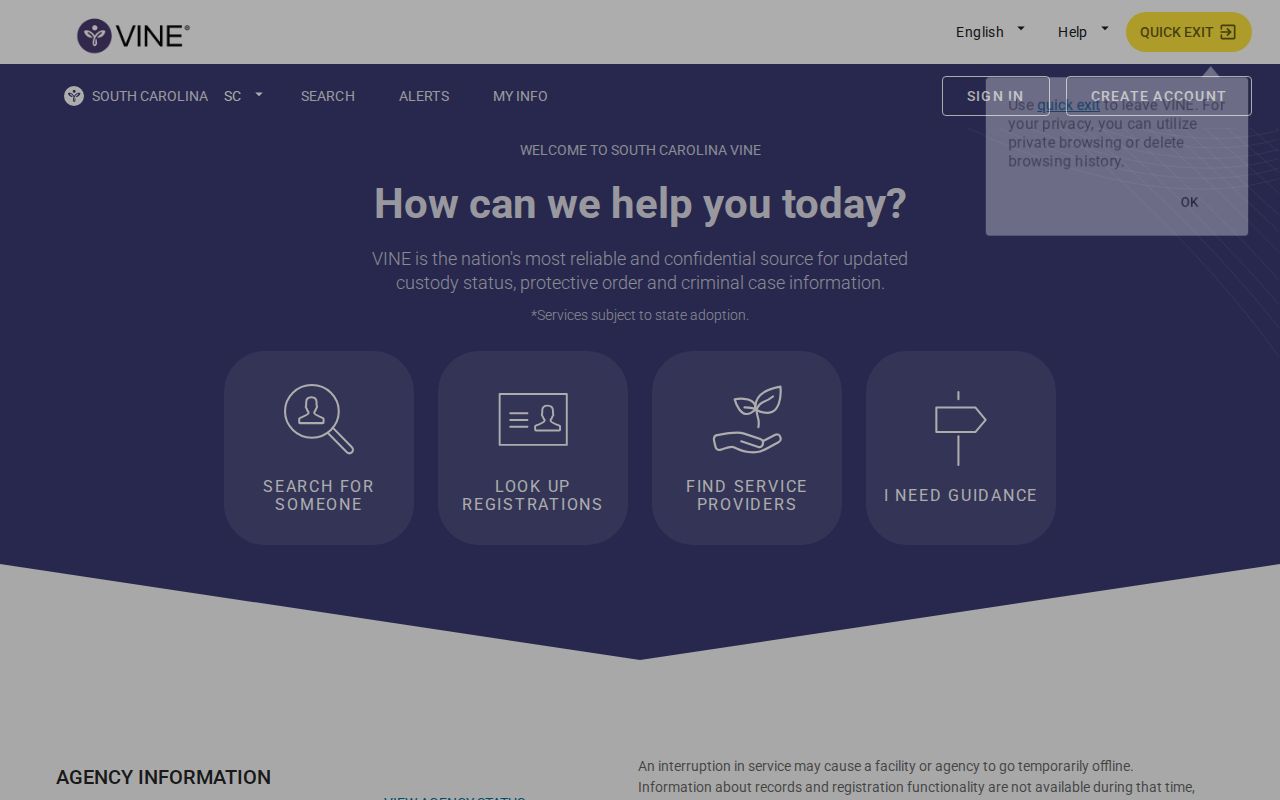
A VINE no-result can reflect scope, spelling, timing, transfer, or an ended record, so verify it with the supplying agency.
Federal Releases in South Carolina
South Carolina has three BOP complexes: FCI Bennettsville, FCI Edgefield, and FCI Williamsburg. The BOP Inmate Locator covers federal records from 1982 forward and searches by register, DCDC, FBI, or INS number, or by biographical fields. Results can show name, register number, age, race, sex, release date, and location. They update daily.
The BOP Inmate Locator preserves a federal release date and may display RELEASED.
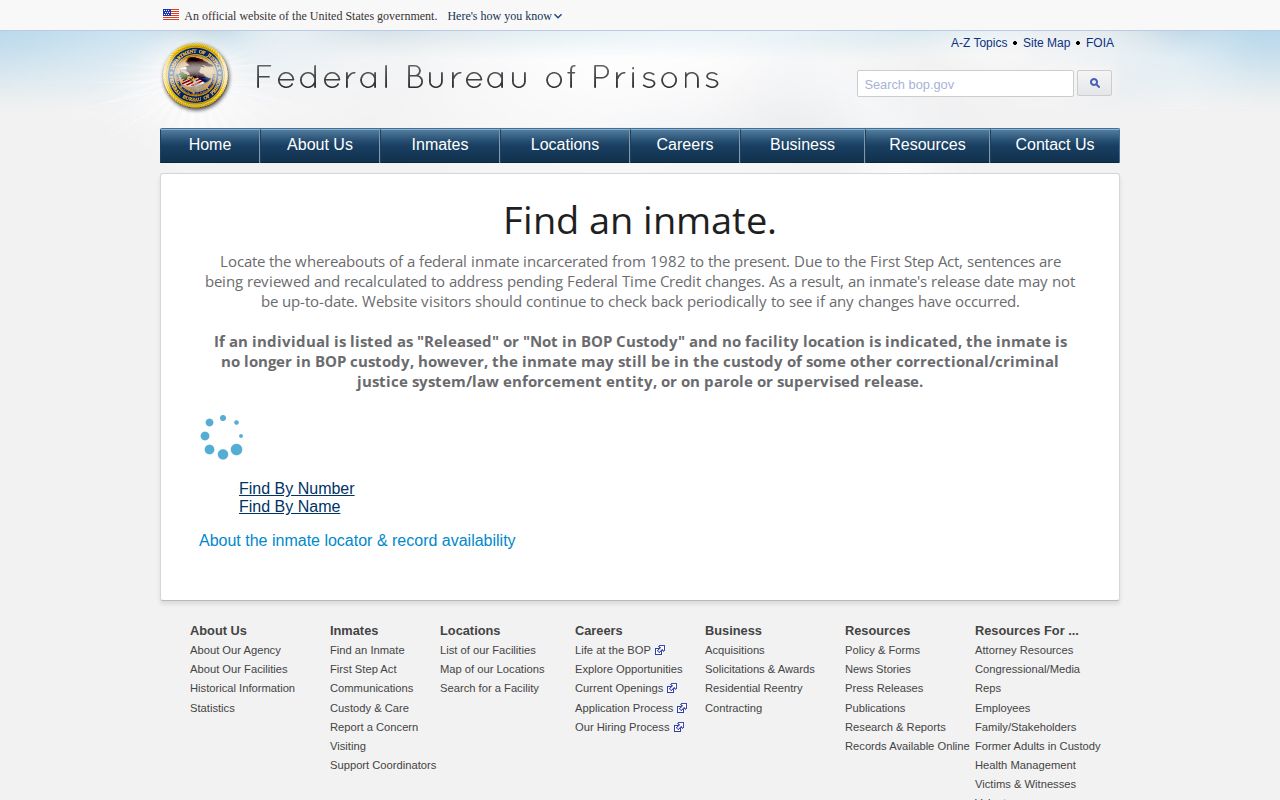
A past date and no facility means BOP custody ended, not that supervision or another authority cannot follow.
ICE’s locator is for current immigration custody or qualifying recent routing, not ordinary county or SCDC release history. An A-number search needs nine digits and country of birth; left-pad a shorter number with zeros. A biographical search uses exact first and last name and country of birth. People under 18 are not searchable. A no-result does not prove release or removal.
The ICE detention directory did not establish a separate dedicated South Carolina facility in the statewide sweep.
An ICE pickup at a county jail is a transfer to another authority, not a community release.
South Carolina Regional Release Routing
Old regional names can send a request to the wrong place. Orangeburg County Detention Center was historically called Orangeburg-Calhoun Regional Detention Center. Calhoun has a routing page, but the current physical facility appears once under Orangeburg. Sumter County Sheriff’s Office Detention Center also appears in older records as Sumter-Lee Regional Detention Center. Its physical listing belongs under Sumter, while Lee still needs a route to the operator.
Lee Correctional Institution is physically in Lee County even though another locality may explain its release path. These examples show why the facility operator and physical location control the release record. A county name embedded in an old title does not create a second building or a second release file.
South Carolina Custody Comparison
The same name can appear in a court case, a jail file, a prison locator, and supervision data. Match the system to the event and note each source date.
| System | Use it for | Do not infer |
|---|---|---|
| County jail roster | Present local custody | Absence alone does not prove release |
| County release record | Local exit date, type, authority, or transfer when recorded | It does not cover SCDC prison departures |
| SCDC current search | Current state-prison placement and projected fields | A no-result does not prove release |
| SCDC released search | Actual state-prison Release Date and Release Type | County does not mean county-jail release |
| SCDPPPS | Prior-day active supervision | Absence does not prove sentence discharge |
| BOP or ICE | Federal or immigration custody scope | An ended record does not clear every authority |
| Court Public Index | Bond, disposition, sentence, and filed orders | A docket is not live custody data |
- Release
- The end of custody by one named facility or system.
- Discharge
- The end of the sentence or supervision duty under the controlling record.
- Parole
- Conditional release from prison under Board authority and SCDPPPS supervision.
- Probation
- Court-ordered community supervision that may follow or replace confinement.
- Expungement
- A legal process that can restrict or remove qualifying records; release alone is not expungement.
South Carolina Release Directories
For a county jail exit, select the county that held the person and follow its local record route. The statewide facility directory then identifies the physical jail, SCDC institution, federal complex, military brig, or other verified facility. Each operator keeps its own release evidence.
Regional names are de-duplicated by physical facility. Juvenile entries remain restricted and do not appear through the public adult VINE search. A jail that accepts federal or immigration detainees is still one physical jail, not a second facility under another label.
Use the County Directory for county-level release records or the Facility Directory in the main navigation when the building is known.
Operator-first routing keeps federal, state-prison, and county-jail release records from being combined into one misleading result.