
South Carolina Parole and Probation
South Carolina uses several forms of supervision, and the record label should control the description. Parole is a conditional release from prison authorized by the South Carolina Board of Paroles and Pardons. The South Carolina Department of Probation, Parole and Pardon Services, known as SCDPPPS or PPP, then administers the supervision. Probation stems from a court judgment. It may be imposed without a state-prison term or appear after an SCDC stay. SCDC counts probation as its own release type, so it should not be casually renamed parole.
Community supervision can follow a qualifying no-parole sentence under state law. Supervised reentry also appears as a distinct SCDC release type. Those labels describe a prison exit with ongoing legal control, not an unconditional discharge. The same person can therefore have an actual SCDC Release Date while remaining active in an SCDPPPS record. Read the release type, court judgment, and supervision source together.
| Record label | Starting authority | Best verification source |
|---|---|---|
| Parole | Board grant after an eligible prison sentence | Board outcome, SCDC release entry, then SCDPPPS |
| Probation | Court judgment | SCDPPPS and the sentencing court docket |
| Community supervision | Statutory period after qualifying prison custody | SCDC release type and SCDPPPS |
| Supervised reentry | Separate SCDC release category | SCDC release entry and SCDPPPS |
The Board of Paroles and Pardons page shows the statewide decision body and its official materials.
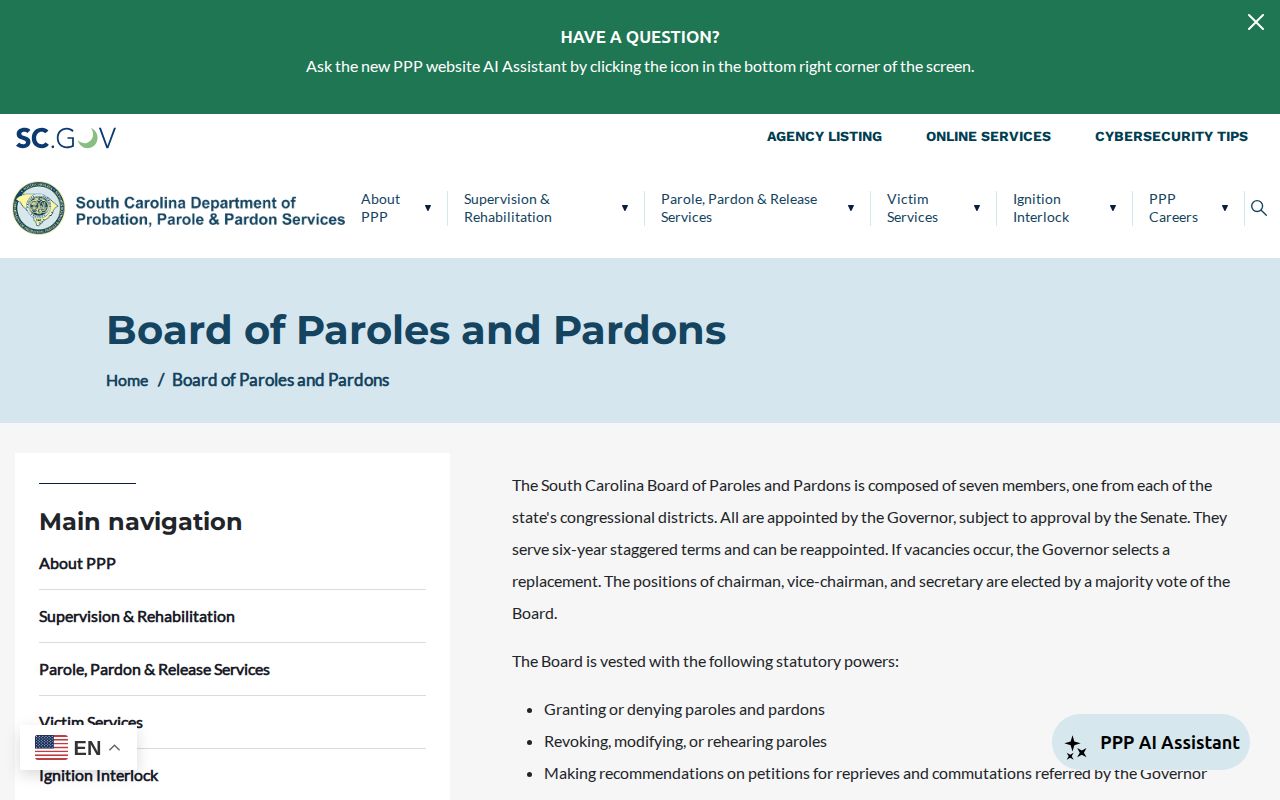
That Board decides parole; it does not replace the SCDPPPS office that supervises an active case.
Check South Carolina Release Supervision
The official SCDPPPS Offender Search accepts specific field combinations. A search may use first and last name, SID alone, first or last name with year of birth, or county with SID, first name, or last name. Start with the strongest identifier available. Namesakes are common, so open the record and compare the SID, birth year, county, and other displayed details before treating a result as a match.
The agency states that the public data represents the previous day. A positive match supports active supervision as of that data date. It does not prove the person is at an office now. A negative result is more limited. The person may have completed supervision, may be under another authority, may be absent because the search terms were wrong, or may need current confirmation from the county office.
- Identify the legal layer. Use SCDPPPS for adult state probation, parole, community supervision, or supervised reentry.
- Search with an allowed field combination, favoring SID or a full name plus another identifier.
- Open the possible match and compare identifiers instead of relying on name alone.
- Record the source date and the stated supervision county or status.
- For a same-day answer, contact SCDPPPS staff in the county of supervision.
- Compare the court judgment or SCDC release entry if the legal basis remains unclear.
The official statewide supervision search illustrates the identity fields and its currency warning.
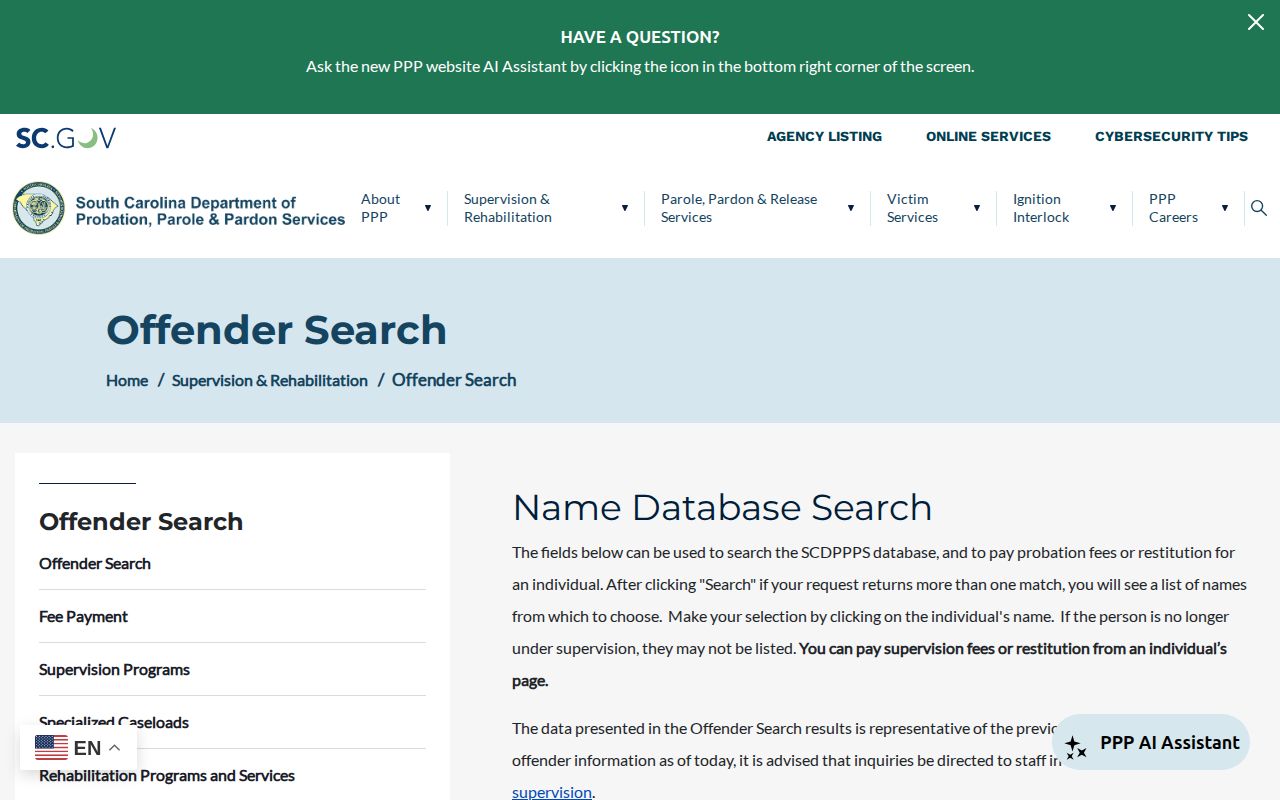
The prior-day note is part of the evidence and should travel with any reported result.
County-based routing matters because an active case is administered through the assigned office. The South Carolina County Directory helps identify the local record path when a jail release or court file must also be checked.
South Carolina Supervision Record Chain
No single statewide tool proves every stage. SCDC's current inmate search excludes parole, probation, and community-supervision cases. Its separate released list records the state-prison exit through a Release Date and Release Type. SCDPPPS then shows the active outside-prison supervision record. A county Public Index can preserve the judgment, sentence, disposition, or later filed order.
Use those sources in sequence. An SCDC release type of parole or community supervision proves a prison departure of that type, not that supervision later ended. An SCDPPPS match shows a supervision record as of its stated date, not the original gate time. A court docket explains legal authority but is not a live custody tracker. Where county jail custody preceded the state case, the local custodian owns that jail episode.
The South Carolina courthouse directory routes a record question to the proper county court.
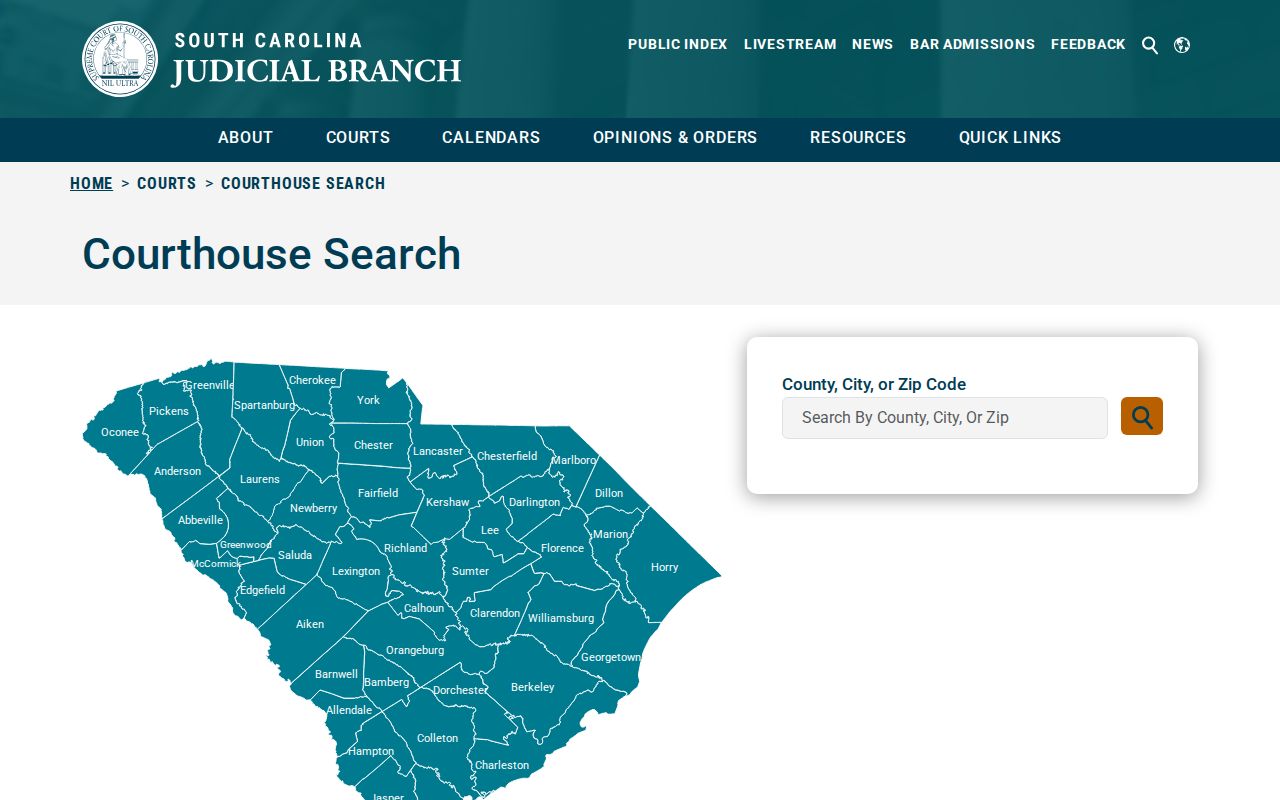
A court file can explain probation or a filed order, but SCDPPPS remains the source for current state supervision.
South Carolina Release Agencies
The Board and SCDPPPS perform different jobs. The seven-member South Carolina Board of Paroles and Pardons grants or denies parole and pardons and may revoke, modify, or rehear parole. Members represent congressional districts, receive gubernatorial appointment with Senate approval, and serve staggered terms. County SCDPPPS staff do not replace the Board's vote. They supervise the case after the Board and release process create that role.
SCDPPPS covers adult probation, parole, community supervision, supervised reentry, and other stated jurisdiction categories. Its online search is the first public check. Current-day questions should go to the county office shown by the agency's routing. If the question concerns whether parole was granted, use the Board hearing and result source first. If it concerns whether the person physically left SCDC, use the SCDC Released Inmate Search.
Statewide adult supervision agency
Public record: SCDPPPS Offender Search
Same-day verification: the assigned county SCDPPPS office
- Parole
- Conditional release from prison after a Board grant.
- Probation
- Court-ordered supervision in the community.
- Discharge
- The formal end of the sentence or supervision authority under the governing rule.
- Absconder
- A person alleged to have stopped reporting or left supervision without authorization.
- Detainer
- A request by another authority that can cause a custodial handoff instead of community release.
Confirm South Carolina Supervision Today
The county shown in a supervision record is a practical routing field. Use it to reach the SCDPPPS office responsible for the active case, not to infer where a person now lives or where an earlier prison exit occurred. Statewide web data can establish yesterday's agency record. Assigned staff are the proper source for a current-day question, a status correction, or the office that holds an existing closure document.
Prepare the full name, SID if known, year of birth, supervision county, and the date the online source was checked. Ask a narrow record question. For example, request confirmation of whether an agency record remained active on a stated date or ask how to obtain the existing closure record. Do not ask staff to create a new legal conclusion. If the case began in court, preserve the case number as well.
A county office answer still does not replace a jail or prison release record. If the person was arrested on a violation, the receiving detention center owns the new booking and custody status. If supervision ended, SCDPPPS owns its closure. If the question concerns the original SCDC departure, the released list or SCDC Inmate Records controls. Keeping those requests separate produces a clearer record chain.
South Carolina Supervision Violations
Supervision conditions depend on the court order, Board action, statute, and individual case. A violation does not itself establish that a person is back in custody. It can lead to agency action, a warrant, a hearing, modification, or revocation, but the current custody result must be checked with the receiving jail or SCDC. Avoid treating an old supervision label as proof of a new arrest.
SCDPPPS publishes a Most Wanted page and a reporting hotline at 1-888-761-6175. That page is selective. It is not a full statewide warrant or absconder registry. Absence from the list is not clearance, while appearance on it does not prove a later arrest. For immediate danger, use 911. For record verification, use the agency route and then check the custodian that may have received the person.
The SCDPPPS Most Wanted source should be read within those stated limits. A supervision office can address an active agency record, while a sheriff or detention center confirms a new booking.
Note: A selective public list cannot establish statewide warrant status, case closure, or present physical custody.
South Carolina Release Preparation
SCDC reports that reentry planning begins at first contact and formal preparation starts before the expected prison exit. Its published work includes obtaining identity documents, benefits navigation through SC Thrive, education, vocational or skill programs, prison industry assignments, and preparation for transition. These are statewide program routes. They do not promise eligibility, placement, or a particular result for one person.
The agency's release policy also separates the prison packet from later supervision. SCDC staff audit release authority and detainers, prepare required certificates for specified supervised release types, return stored identification and property, and record post-release contact details. SCDPPPS takes the supervision role where the release type or court order requires it. That handoff is why both records may be needed.
The official SCDC programs and reentry page identifies the agency's statewide preparation routes.
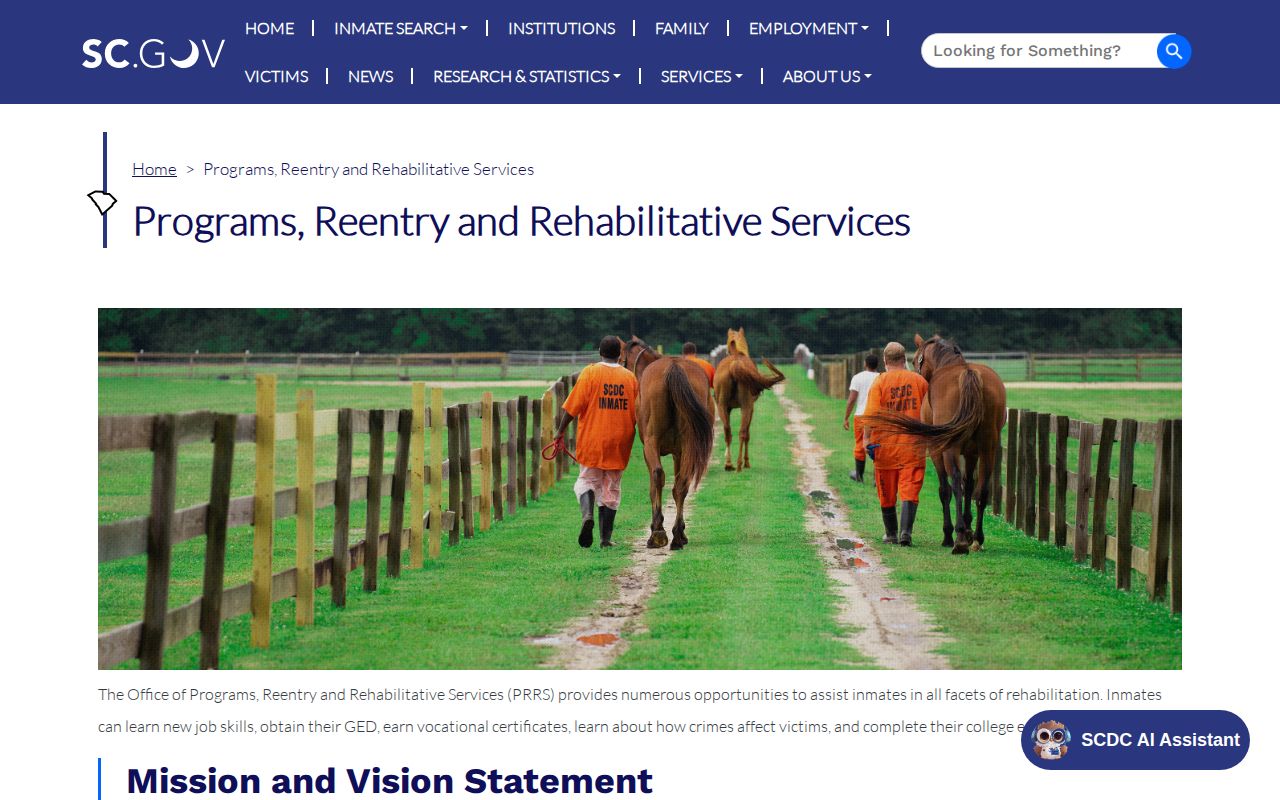
Program information helps explain the transition process, but it does not replace an SCDPPPS status check.
South Carolina Supervision Discharge Proof
South Carolina law gives successful community-supervision completion a specific result. Section 24-21-560(E) says that successful completion satisfies the sentence and requires discharge. Parole is different: Section 24-21-670 generally continues parole until the maximum term expires without a good-conduct deduction. The governing category and record dates must therefore be identified before anyone describes the sentence as complete.
No universal public discharge-certificate lookup was found in the statewide research. That gap matters. The SCDPPPS search represents prior-day active supervision and warns that someone no longer supervised may not appear. A missing online result cannot, by itself, serve as formal proof of discharge. When a closure record matters, request the existing closure or discharge documentation from SCDPPPS and give enough identifiers and date context for the agency to locate it.
A pardon is separate from supervision discharge. Under Section 24-21-1000, a granted pardon calls for a certificate. It should not be inferred from a completed probation or parole record. The full prison release record remains available through the statewide South Carolina released-inmates search paths when the physical SCDC exit must also be documented.