
South Carolina Release Dates
A projected date is SCDC's present calculation for an incarcerative term under the sentence, custody credit, and earned-credit facts then in the record. It is not the later historical Release Date shown after departure. A parole eligibility date only marks when consideration may be possible. Supervised-reentry eligibility is a separate program milestone. None of the three promises that a person will leave all custody on that day.
A pretrial county detainee usually has no sentence-based release date. Bond, a court order, dismissal, transfer, or another case event may control the next move. A locally sentenced detainee may have a date calculated by local officials. A person sentenced to state prison has an SCDC calculation. First identify who holds the person. Then use that operator's record rather than applying state-prison credit rules to a county jail stay.
The SCDC search disclaimer explains that the ordinary locator is limited to current state prisoners.
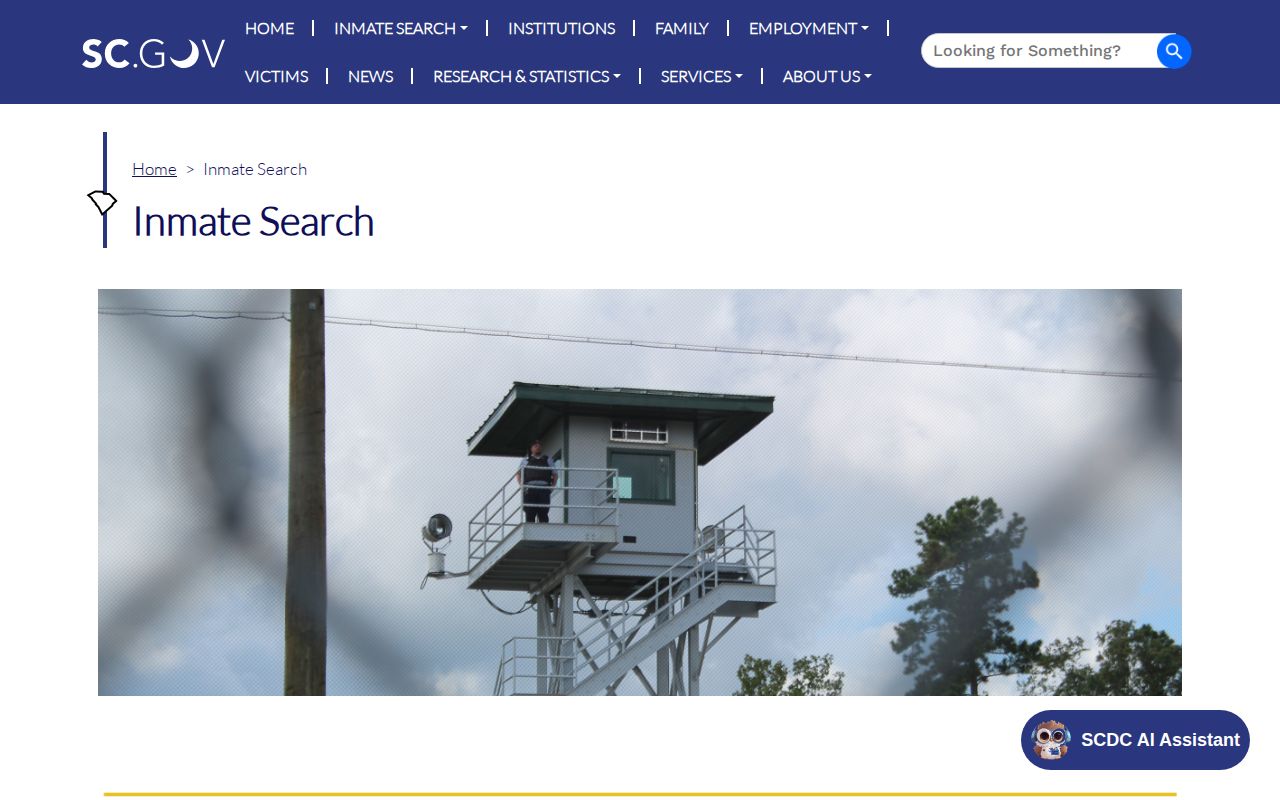
Once the person leaves SCDC custody, the current search can stop returning them, so an actual release must be checked in the separate released list.
SCDC Projected Date Fields
The SCDC current detail report keeps three future milestones separate. PROJECTED RELEASE DATE is the agency's current prison-term calculation. PROJECTED PAROLE ELIGIBILITY concerns possible Board consideration, not a favorable vote. SUP. REENTRY ELIGIBILITY concerns supervised-reentry eligibility. A field may state NOT ELIGIBLE. Reading one field as another can shift the apparent date by months or years and can also misstate what will happen then.
| SCDC field | What it means | What it does not prove |
|---|---|---|
| PROJECTED RELEASE DATE | Current SCDC estimate for completing the incarcerative term under recorded facts. | Freedom from a detainer, another sentence, supervision, or later court action. |
| PROJECTED PAROLE ELIGIBILITY | A possible eligibility milestone under the governing offense and date rules. | A hearing result, parole grant, or physical departure. |
| SUP. REENTRY ELIGIBILITY | A distinct supervised-reentry program milestone. | Ordinary parole or an actual release event. |
| Earliest Possible Release Date | An educational calculator output based on user entries and maximum assumed credits. | An official calculation for an already-sentenced person. |
The official SCDC agency hub links the current search, release calculator, released list, and statistical resources.
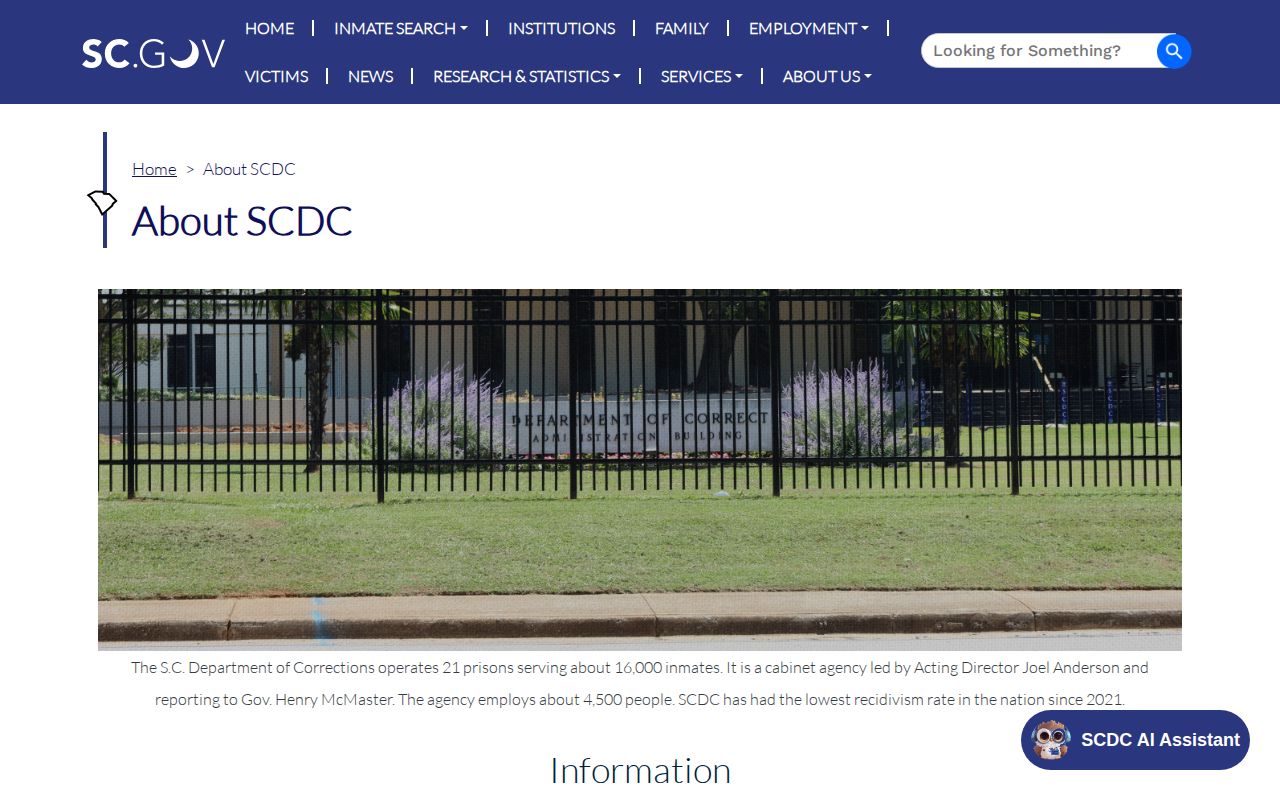
Using the hub helps keep a forecast, an eligibility date, and a completed release record in their proper official channels.
Note: A date beside parole eligibility is an opportunity for review, not a Board decision or a prison gate date.
Find the SCDC Release Date
Use the current SCDC locator for a person now serving a state sentence. Compare identifiers before relying on a date. The record may show SCDC ID, SID, admission date, current location, offense and sentence rows, photograph information, credit levels, disciplinary or movement information, and the three projected fields. Namesakes are common enough that a name by itself is weak proof.
- Confirm that SCDC, rather than a county jail, BOP, ICE, or another authority, now holds the person.
- Open the SCDC Incarcerated Inmate Search and search with the strongest identifier available.
- Match SCDC ID or SID, name, age, offense, and current location before reading the projected fields.
- Record the exact field label and the search date. Do not shorten parole or reentry eligibility to “release date.”
- For an official calculation question, contact SCDC Inmate Records at 803-896-8531.
- After departure, replace the forecast with the actual Release Date and Release Type in the released list or a responsive agency record.
For a county sentence, ask the county custodian about its calculation and use the court judgment to check the imposed term, suspended portion, and custody credit. Local productive-duty credit can be set by local officials within state law. It should not be presumed to match an SCDC prison calculation. The County Directory routes searches to the proper South Carolina locality.
SCDC Release Calculator Limits
The public SCDC release-date calculator is educational. Its output is labeled Earliest Possible Release Date. It assumes maximum good time and maximum work credit and depends on the offense, sentence, jail-credit, and other facts entered by the user. It does not account for every prior or later conviction and does not handle Youthful Offender Act calculations.
Most important, SCDC says the calculator cannot calculate the official date for a person who has already been sentenced. Use the current inmate detail or Inmate Records for that task. A person may fail to earn an assumed credit or may forfeit credit after discipline, moving the actual release later than the educational result. The calculator also cannot resolve a detainer, a second sentence, or a later court order.
- Custody credit
- Time credited toward a sentence, including qualifying time served before transfer or judgment.
- Concurrent terms
- Sentences that run at the same time, subject to the judgment and agency calculation.
- Consecutive terms
- Sentences that run one after another and can extend the controlling date.
- Forfeited credit
- Previously available sentence credit lost through an authorized disciplinary process.
The SCDC programs page shows that release preparation can start well before the final calculated date.
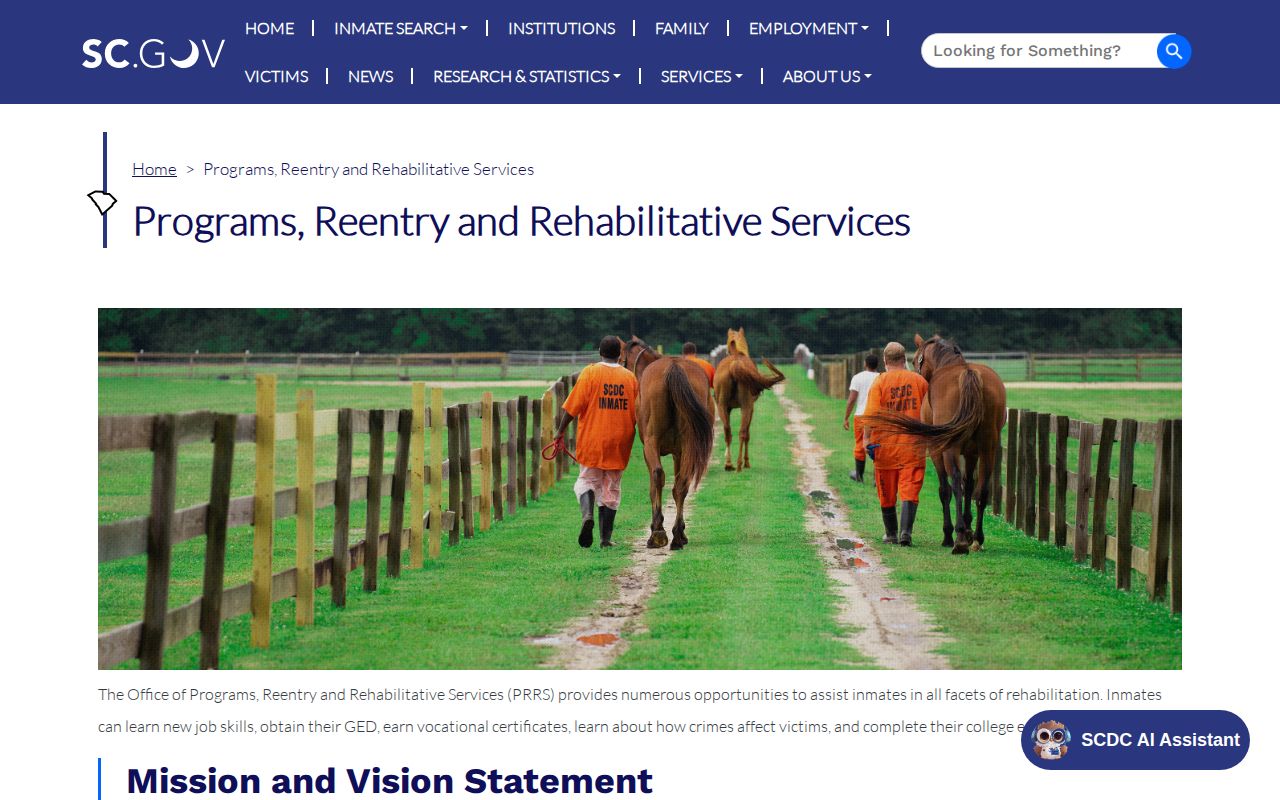
Preparation activity does not change the legal meaning of the projected field or guarantee a particular release outcome.
South Carolina's 85 Percent Rule
It is wrong to say every South Carolina prisoner simply serves 85 percent. Section 24-13-100 defines a “no parole offense” through offense classifications and maximum punishment. It generally includes a Class A, B, or C felony, or an exempt offense under Section 16-1-10(d), punishable by a maximum term of 20 years or more. The offense, sentence date, and other governing provisions must be checked before applying the rule.
For that no-parole category, Section 24-13-150 sets the familiar floor. Subject to independently governed death or life cases and other statutory limits, the person cannot receive early release, discharge, or community supervision until at least 85 percent of the actual imprisonment imposed has been served, excluding any suspended part. Good-conduct, work, and education credits cannot reduce service below the floor. The statute does not convert all sentences into the same formula.
Section 24-13-125 contains a different 80 percent threshold for work-release eligibility for specified no-parole prisoners. That is not the 85 percent release or community-supervision floor. Section 24-13-175 also provides a 365-day year for sentence and time calculations. Keeping those provisions distinct prevents an eligibility rule from being misreported as a guaranteed exit date.
South Carolina Sentence Credits
Section 24-13-210 provides different good-conduct rates for different sentence classes. An eligible SCDC prisoner serving a sentence other than a no-parole offense may earn 20 days for each month served. An eligible person serving a no-parole term may earn three days per month, while the mandatory service floor and exclusions still apply. Life sentences and a specified mandatory 30-year term have statutory limits. The responsible authority can forfeit credit after rule violations.
An eligible locally sentenced detention or public-works prisoner may earn one day for every two days served. That state rule does not make every county calculation identical. The local custodian must apply the actual judgment, local administration, and any credit record.
| Credit or rule | Published framework | Main limit |
|---|---|---|
| Non-no-parole SCDC good conduct | 20 days per month for an eligible prisoner | Must be earned and may be forfeited |
| No-parole SCDC good conduct | Three days per month for an eligible prisoner | Cannot cross mandatory service and does not apply to excluded terms |
| Local sentence credit | One day for each two days served for an eligible local prisoner | Applied by the responsible local authority |
| Productive duty or education | Different rates based on sentence class and qualifying activity | Caps, eligibility rules, and the 85 percent floor can apply |
Section 24-13-230 authorizes productive-duty and education credits. For an eligible non-no-parole SCDC sentence, the director may grant up to one day for every two qualifying days, with combined work and education credit capped at 180 days a year. For a no-parole sentence, the statute provides six days per month, capped at 72 days annually, without crossing mandatory service. Educational credit is unavailable for a violent crime as defined by Section 16-1-60. Local officials publish a local productive-duty rate between zero and one day for each two days worked.
Note: Credit rates describe what may be earned; only the custodian's current calculation shows what has actually been posted or lost.
Why SCDC Release Dates Change
A projected date is rebuilt from facts that can change. Some changes affect sentence length. Others leave the SCDC date intact but determine whether another authority takes custody afterward. A detainer, for example, can turn the SCDC exit into a transfer. That is still an SCDC Release Date, yet it is not an unrestricted return to the community.
| Factor | Possible effect | Best source |
|---|---|---|
| Earned or restored credit | May move the current calculation earlier within legal limits. | SCDC current detail and Inmate Records |
| Discipline or forfeiture | Can remove credit and move the date later. | SCDC disciplinary and sentence records |
| Court amendment or resentencing | Can change the term, suspended part, or custody credit. | Filed court order and SCDC calculation |
| Concurrent or consecutive term | Changes which sentence controls the date. | Judgment and sentence computation |
| Parole decision | May permit conditional release after processing but is not itself the gate time. | Board result, then SCDC released list |
| Detainer or hold | May send the person to another custodian at the SCDC exit. | SCDC export or record and receiving agency |
The South Carolina Board of Paroles and Pardons page links the current planning calendar.
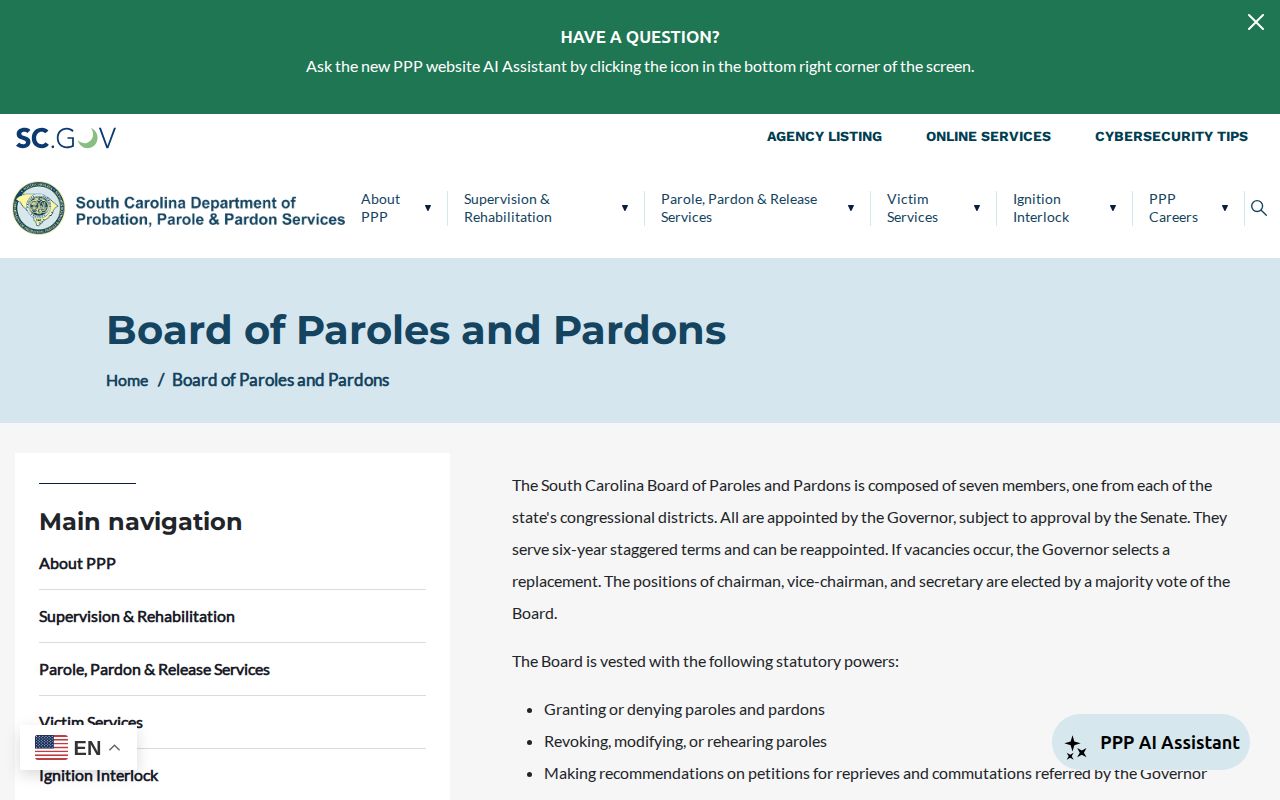
A calendar date only schedules Board activity. Person-specific results and the later SCDC release entry are needed before treating parole as an actual prison exit.
Confirm the Actual Release
The reliable chronology begins with the court judgment, moves to SCDC's current calculation, and keeps projected release apart from parole and supervised-reentry eligibility. Once the person departs, search the date-based SCDC Released Inmate Search and read the exact Release Date and Release Type. Export the result when the detainer indicator or other added fields matter. If supervision follows, check SCDPPPS as a separate system.
SC VINE can add notice for participating records, but it is not a sentence calculator or permanent archive. Participating systems send updates on a stated 15-minute interval. That interval is not a promise that every event appears at once. A person who transfers between agencies requires a new registration, and a no-result can reflect scope, spelling, timing, or an ended record. The VINELink Release Check explains the statewide alert path.
The SCDC Victim Services page provides a separate official route for state-prison status and projected-date information.
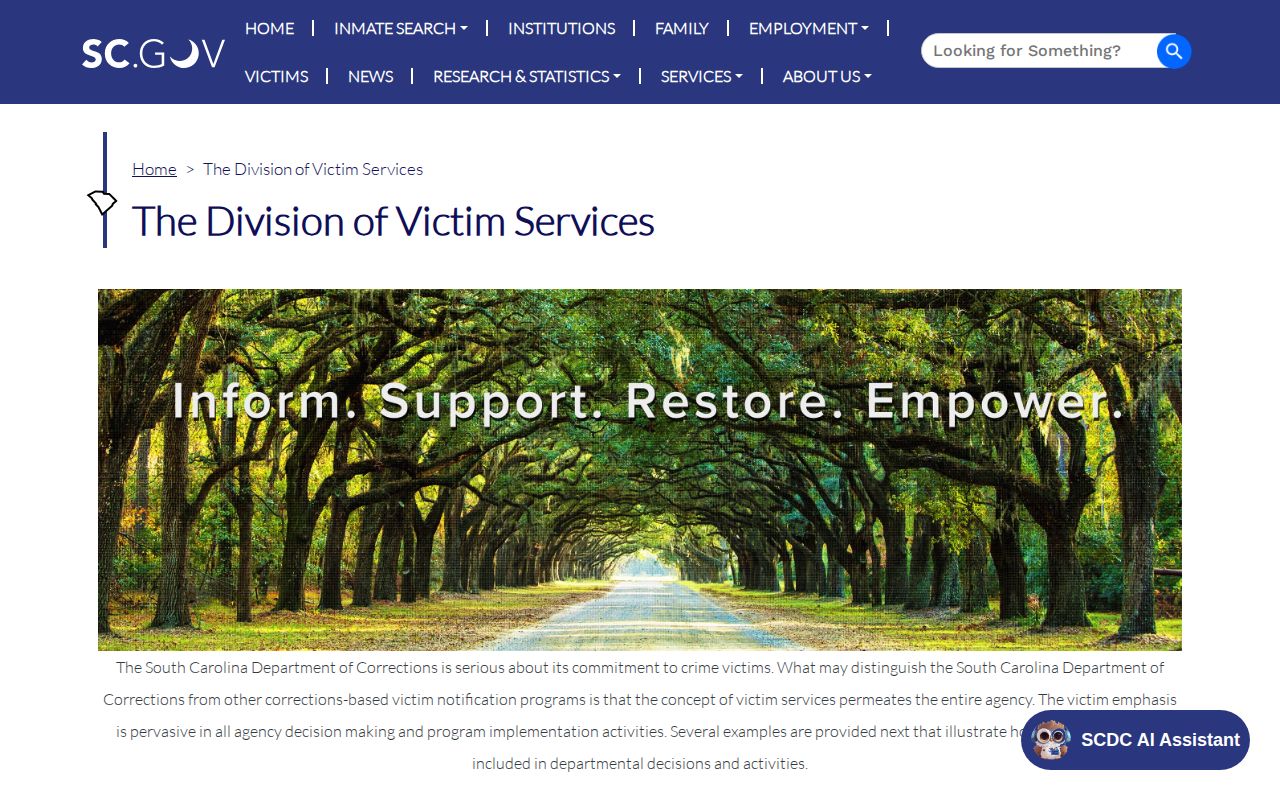
Formal SCDC victim registration is handled by that division rather than an online registration form, while general date questions remain with the appropriate SCDC record channel.
For a formal older record, request the existing sentence computation or release documentation through SCDC FOIA. A focused request states the name, SCDC number, approximate time span, and specific existing fields. This avoids asking the agency to create a new calculation and gives it a clear record to locate.
Public Record Search
Sponsored Results